"Extreme Heat" seems to be 37-40 degrees Celsius which is bafflingly mundane to me as an Australian who grew up in rural New South Wales. We'd pack 30 kids and a teacher into an un-airconditioned classroom with just a ceiling fan and the windows open in that temperature.
I imagine the buildings there just aren't built to support that heat plus the body height of hundreds or thousands of attendees?
People tend to rely on air temperatures when in reality the lethality of heat is probably more linked to the wet-bulb temperature.
The human body has a natural resting temperature of about 37°C, and metabolism of course generates more heat constantly, so we constantly have to shed that heat. When the temperature is low, we can rely purely on conducting the heat into the atmosphere to shed the heat (which is probably why internal body temperature is higher than the atmosphere!). At higher temperatures, conduction is less efficient, or sometimes even adds heat load into the system (at above 37°C, obviously), so we start relying on evaporative cooling (i.e., sweat) to cool us down.
The wet-bulb temperature is the minimum temperature that can be reached by evaporative cooling. So when the wet-bulb temperature is in the mid-30s °C… people start to become literally unable to regulate their core body temperature, and the heat is lethal. Wet-bulb is largely a combination of the temperature and humidity, but unfortunately, it's not typically reported in most weather reports, so people go off of the air temperature (and the humidity) that is reported.
Which is a long-winded way of saying "the humidity matters a lot for how much a given temperature is bearable." I don't know what environment you come from purely by rural New South Wales, but my first guess is the semi-arid and thus low-humidity bush regions of the state, which means the apparent wet-bulb temperature of 37-40°C would be a lot lower than the equivalent 37-40°C for most of the humid continental climates of Europe.
Dew point is a much better measure of the oppressive, muggy, sweltering feeling than humidity. The dew point in Australia ranges in the 5ºc - 15ºc range at which 30ºc after sunset feels vastly different, way cooler than South East Asia where the dew point is constantly above 24ºc.
> The total heat transfer of a human is the same as the metabolic heat production, and is approximately 100 watts, or 400 kJ/hr, or 60-70 kcal/hr at rest.
It occurs by:
Humidity makes a big difference in how stressful the temperature is (wet bulb temperature accounts for this somewhat). The age of the attendees and the tendency of the building to heat would also be factors.
Looking just at ambient air temperature is an easy mistake to make. I used to be like that, always surprised why people whine so much near the coast in winter with their comfortable numbers and thinking I’m superhuman compared to them. I stopped when I learned first-hand that their negative 17 degrees feel as bad as our negative 30.
If you live in a town in New South Wales where the average humidity is less than 50% in the wettest (or, should I say, least dry) season, you might not understand what it feels like in London where the average doesn’t dip below 65% any time of year.
Today London will feel at least 4 degrees Celsius hotter than Hong Kong. The latter is already an extremely unpleasant place to be in these conditions (and had in fact its own very hot weather warning issued), and unlike London it has a very strong culture of air conditioning.
4 degrees might seem like not a lot, but heat extremes are a tricky beast. Once your body cannot evaporate heat fast enough, you’re literally toast.
It's not just cost. Many people in Germany claim they get sick or experience neck pain the instant they stand under an AC. I cannot relate at all and I'm very puzzled, but at the same time I don't want to deny their experience.
I'm Lithuanian and that's my pet peeve when making fun of my culture. I think it comes from homeopathy BS that has roots in Germany.
Funny enough Germans appreciate good ventilation, but here we have following: wind outside - ok, same wind inside (draft) - you killing me. Always wear slippers inside, protect your feet and neck from coldness. Avoid AC at all costs, especially bad if it blows right into your face. Also no fans right into your face or body. Wet hair - do not under any circumstances go outside. Even the most respected people I know fall into this trap.
Possibly some confusion comes from rhinorrhea - people mix up these symptoms with actual disease. And most ironically lack of appropriate ventilation increases spread of respiratory infections.
Last decade+ we had a bit of a HRV fad, wonder if that is reflected in some stats. Anecdotally I heard people shut these off to save power and open window instead...
Portable AC exists and people do use it, but it's loud and awkward with casement windows. This is a bandaid solution at best. Yet, I've seen them sold out in the summer, so people do use them.
You'll probably want a split unit. Minimum $600 including install in Eastern Europe, but more likely to be over 1k.
Extrapolate salaries, cost of living and that's more like 3k in your money.
That said magic happens when government subsidizes things. Friend spent 8k euro for 10kW solar + 15kWH battery system, of which government reimbursed 7.8k. 1.35k USD for entire system, when you'd pay this much for someone to plug some cables for half a day.
Still doesn’t solve the cost factor. If you don’t have the money you don’t have the money. And if you barely have the money you’re probably going to take the risk because the risk is still very low.
If they are insulated properly (lots of roof insulation) it also keeps the heat out. I'm building a house and last week it reached 32c here, inside got no warmer than 23c on the upper floor. I don't have AC installed yet, just HRV.
Yeah we ve reached stupid levels of weather scare. France did have some extreme temperatures over 42, but 40 is a typical Mediterranean heat wave, not Armageddon
It’s litterally the hottest month of June ever registered in France, beating a 23 years old record. Very typical heat wave indeed.
EDIT: actually yesterday was the hottest single day ever in recorded french history, and it happened in the merry month of June, not August. Truly your typical heat wave.
EDIT2: I was wrong, the record is not actually 23 years old, but… 1 year old, as the record had already been broken in 2025. Can’t wait to get my next dose of very typical 44C temps in may next year.
No worries as they'd had their vegemite for brekkie providing all the salt they need to offset the constant sweat. None of this soft modern electrolyte bullshit, just beer dregs on toast.
A lot of it is acclimatization. In Taipei this morning, at 9:30 it’s already 31C and 73% humidity, forecasted to hit 37C by noon. My first year living here this was unbearable, but now it’s tolerable. It’s just summer, not a spurious heat wave.
Depends, In northern NSW, the heat it humid, in the south / west it's usually dry. It gets hot, like opening a oven door, but it's not a wet humid heat that kills you.
I tolerate heat well, I feel very comfortable at 28C but I get cold easily. My sister is happy at 18C and starts overheating at 25C. Not everyone is the same.
I've always assumed there is some sort of "acclimation" period, maybe even related to the conditions you grew up in. I much would rather spend a time outside in -40c (with proper outerwear) than 40c. I'm relatively healthy but I feel like my body shuts down at anything above 36c
My understanding is that full heat acclimatization requires elevated core body temperature for 30-60 minutes a day for several weeks to really kick in and it’s easily lost during winter. Someone going largely from air conditioned to air conditioned building during the summer months may not even build up much of a passive acclimatization.
I don’t do as well in heat so for the summer hiking months in California so I have to do a two week sauna or hot bath protocol, otherwise I struggle really badly during the season. YMMV of course.
Same. There definitely seem to be strong genetic factors (just based on my personal experience TBF). I also notice I adapt substantially after two to three weeks of consistent exposure. But it does have to be consistent - hiding out with AC 24/7 prevents it.
That’s because you pay attention to your body and you’re not in denial. Above 37 degrees, your body cannot regulate itself, and it starts being seriously uncomfortable before that. Going outside for a run when it’s 40 is unbelievably stupid.
I had 40 Celsius today at around 9pm. Middle of the night now and it’s 34. It’s as cool as it’s going to get before it starts heating up again tomorrow. Where I live there are no laws on max temperature in residential housing so the owner (I’m renting) doesn’t have to do anything about it. Never mind the poorly insulated, black slate roof (I’m on the last floor) or lack of AC (I’d have to foot the bill anyway).
Sitting here in central London on the day of the conference it seems a bit wimpy to me. Max today is 34C which is hot but not life threatening. Some trains may be delayed but they do that all the time. I assume the LSE library is aircon. Most such buildings are these days.
You'd think a bit of heat would be a bonus given the topic.
The dowside of hosting your conference in exquisitly beautifull old locations is that they have no airco.
While well managed traditional cooling management can keep them pleasant enough, this would require light programme adaptations, basically shifting to starting early morning - noon, covering the glass dome, and night ventilation, but that seems to be more insurmountable than cancelling.
Apparently the LSE does have airco spaces, but these aren't as inspirationally nice it seems.
Europeans don’t get scolded enough for their resistance to air conditioning. In terms of accounting for preventable deaths, Greece has 2x more heat-related deaths per capita annually than Mississippi has gun deaths.
By comparison, the worst US state for heat related deaths, Nevada - a literal desert - has >10x fewer deaths per capita than Greece.
Well yeah, because it requires re-engineering the entire built environment!
Heat waves only became a serious problem in Europe in the last decade. The vast majority of buildings predate the need for air conditioning by several decades - and in plenty of cases by several centuries. The buildings are designed around being livable in a pre-climate-catastrophe climate without needing air conditioning - which is perfectly achievable if you aren't stupid enough to build a city in the middle of a desert.
Adapting all those buildings and streets will take time. Blindly putting AC everywhere and forcing everyone to drive from building to building in an ACed car isn't going to work, that kind of wasteful behavior is how we got into this situation in the first place. You need to redesign the heat management, and you need to start with things like mandating shades to prevent heat from entering buildings in the first place, and planting trees to avoid the heat island effect.
AC will indeed be needed to deal with the final heat peak when outside night temperature is in excess of 30C, but it isn't the one-size-fits-all solution for every heat-related problem it might seem at first glance. If your AC needs to run for more than a few days per year, you've seriously screwed up.
An AC unit essentially requires just a small hole in the wall and a bracket to hold the compressor unit. Europeans have walls don't they? I'm European and I have a wall that could host an AC unit. The barrier is regulatory not engineering.
By all means install an AC unit to deal with the worst of it. Just install shades as well when you've got the scaffolding out so you can install a smaller, cheaper, and less energy-hungry one.
Unfortunately I personally live in a highrise, and in a rental unit, so that "small hole and a bracket" definitely isn't an option for everyone.
Yes you can (I've got one), there are various window seals to adapt to that or you can dyi too. The noise etc make it a temporary solution at best but it's possible.
You'd have to have your windows open at all times with only a thin fabric blocking the opening to do that with most european windows. And then you still have your compressor inside generating heat.
Is this actually illegal in many places? I proposed this to my parents in Germany and they seemed to be under the impression that they could install one but their village is getting a village-wide heat pump system this fall that can also cool in summer, so they are just sitting this summer out as is.
I highly doubt there are many (if any) places with "installing any kind of AC is illegal" laws.
On the other hand, there are plenty of noise-related laws preventing you from installing an AC loud enough to be a nuisance for your neighbors. But that's solved by getting one with proper sound isolation, or placing it in such a way that the noise doesn't travel to the neighboring properties.
Similarly, you aren't allowed to install an AC on the facade of a protected historical building. But that can be solved by installing it on the rear of the building (where it is invisible), or by placing the unit itself indoors and using hidden air vents.
There's also the issue of landlords and HoAs banning you from making modifications, but that's not really a matter of legality.
The rules in NL at least are 45dB during hte day, 40dB at night, at property line.
Our machine in "silent" mode is around 42dB ~60cm from the unit, and we can get it to 40dB with a little distnace from property line and a sound barrier between it and the neighbour. It really is _shockingly_ quiet compared to the dull roar of AC that was ubiquitous to me growing up in central California. (40 dB is "faint" or "computer/babbling brook according to https://soundproofingguide.com/decibels-level-comparison-cha... ) Neighbours still whine about it though. I think they dislike A/C on principle, though.
But making a hole in the wall to the outside is. That would generally be considered a permanent change and requires approval from landlord and in case the apartment building has multiple owners, approval from those as well
Not an engineering problem, but installing a good (not the mobile AC with the flimsy fabric window seal) AC is not easy in a lot of cases. You need the OK from your landlord and since you mount something on the exterior you also need the OK of many neighbors.
You also need an electric wire/fuse with a certain capacity and not every house has that, esp. when it's old, they cook and heat with gas; worse if the cabling etc. up to the property has to be updated too.
And this might sound trivial but if it's a block of flats and every flat installs at least one AC unit all of this adds up to huge additional demand which is far far more than a small hole.
Even now planners are forcing people to build horrible ovens that make no accounting for heat. The planners in Ireland laughed when I talked about over heating in our self built house due to lack of eaves.
People don't value design that cools. Most all the spanish style houses you see in California, if you go back to photos from when they were built in the 1920s they all had awnings over all the windows. Those awnings are basically extinct now. Some people are even painting their buildings dark colors. They will chop down shade trees too in a quest for "natural light" aka heat they are now mitigating with a noisy central AC the whole neighborhood gets to listen to now. No one understands cross breeze and opening windows either. Just run up the AC.
I feel eaves are more to keep the drip line from rain from hitting the foundation than for any heat abatement. Typical spanish style roof will not have anything on the side that isn't sloping for example. Just sort of ends flush with the wall. Some don't have any eaves at all really.
Strange then then places with lots of rain and wind (Ireland, Netherlands come to mind) hate eaves. I guess it keeps builders in business.
Ironically when I had a 200 year old thatched cottage it had 'eaves' by virtue of the thatch extending almost a meter from the wall. It had built up slowly over centuries of rethatching.
My experience is mostly with Californian houses that definitely had eaves.
Being done here too (not Ireland): Right now, councils are approving, and builders are building, apartments/houses that are big square boxes with no eaves or shading, black synthetic cladding, and windows with safety stays that only allow them to open about 8cm so almost no cooling possible. The upper floors of these units are essentially uninhabitable during summer.
This is completely ridiculous you just need to let people use AC properly and it will solve most of the problem with people dying. That doesn’t mean you need to go from place to place in AC or never be out of AC, but every person in southern Europe should have an AC unit in their bedroom and deaths will go down substantially.
Another thing that would help is if Europe stopped being so averse to new construction so that people could build new buildings with central AC that matches the current reality of its climate and demographics, rather than the climate and demographics of last millennium.
> you just need to let people use AC properly (..) every person in southern Europe should have an AC unit in their bedroom and deaths will go down substantially.
Yes, exactly: install AC where it truly helps and where it is truly needed. That's the point I was trying to make. Most of the rest is solved far more efficient by things like installing shades. In other words: don't go all-out on giant whole-home AC without first stopping the huge inflow of new heat.
> if Europe stopped being so averse to new construction
We're not, there's plenty of new construction over in Europe.
The difference is that European buildings are built to last, so structurally there's no need to tear them down after a couple of decades. They are perfectly usable for another half-century after a minor renovation (including retrofitting AC!), so why destroy a charming historic district for absolutely no reason?
That doesn't mean buildings are never torn down, of course. Right now a lot of post-WWII rental units are being replaced by new construction, as they are architecturally nothing special and renovating them to modern standards is simply way more expensive than replacing them entirely.
I get rage when I hear those "5 clever tips to stay cool without A/C".
Many buildings already have shades, but please tell me more how those shades and
"properly ventilating during the night" (aka not getting sleep half the night due to outside noise) will keep my apartment at a livable temperature when the air temperature outside never drops below 23 degrees for more than an hour.
You can't effectively remove the heat that has pooled in the apartment with a 2-3 degree temperature difference, let alone in the few hours where you actually have that difference.
So because of thinking like the one in your post, we can't have real AC's (because to "protect the environment" we'd first need to install every other system that doesn't help then prove that with a mountain of paperwork), so my only option is to open the well-insulated window so I can stick the coolant hose of a portable unit through it.
I think the "properly installed AC bad" mentality will only change once the entire population of renters has those inefficient portable units (that are de facto impossible to regulate) and even the anti-AC group realizes that encouraging "real" ACs is much better than the workarounds that the status quo forces.
> no need to tear them down after a couple of decades
Where are people constructing buildings that need to be torn down after a couple decades? This is a refrain I've heard about construction (in the US?) several times in discussions like these, and I find it very puzzling.
I've seen some 2020+ construction in the Texas market that might not make it much beyond 2040. If you want to see stuff that lasts, constrain year of construction to the 20th century on Zillow.
I know of entire subdivisions where the new homes are being actively consumed by black mold due to insufficient HVAC capacity for latent heat removal. Every single central dehumidifier installed in those builds has lost its refrigerant charge due to some common manufacturer (Honeywell) defect. So, in some cases we didn't HVAC hard enough despite being America.
I don't understand how you can maintain a civilization in a place like Miami or Galveston without modern hvac.
"An unusual feature of Japanese housing is that houses are presumed to have a limited lifespan, and are often torn down and rebuilt after a few decades,..."
Europe is a continent with a lot of different countries, all with different laws and regulations. Even the ones who are in the European Union have different rules and regulations.
So please realize that any blanket statements about Europe work as well as making one about the Americas (ie North/South).
A US state is not a country. I get that there is a lot of federalism in the US and that states often have different laws and regulations, but the same is true for European countries. You can compare the US to Germany, or Sourh Carolina to Bavaria, by your own logic.
You can compare all of the US to just a suburb of Paris, if you insist on making stupid comparisons, but lumping all member states into one monolith is pointless both ways. Oregon is incredibly different from Florida, and so is France from Romania
> Another thing that would help is if Europe stopped being so averse to new construction so that people could build new buildings with central AC that matches the current reality of its climate and demographics, rather than the climate and demographics of last millennium.
Agreed. I live in an apartment complex finished in 2020 and they have no provisions for AC, really not optimal. At least add provisions for holes so renters can easily install a mini split.
By switching from burning Russian hydrocarbons for heat to heat pumps so you can heat and cool while being more efficient? This isn't a rebuild, it is a moderate adaptation to the actual requirements to live in the Europe of today.
For steam based heat systems there is also cooling options, so that is a fix for those cities with central heat service.
Yeah, the outdoor units are quite often not quiet. Which matters with houses on small plots very close to each other. For that reason a water-water (earth-water) heat pump would be preferable as that's much more quiet but also much more expensive.
My nose simply doesn't work with it, I get an allergy-like reaction that never stops (non-allergic rhinitis), and my wife has the same issue, and many people I know too.
... actually works just fine. How do you think mass AC adoption in the US happened? Window units work just fine. Fancy splits and central ducting can come later.
Look at the population graph of a city like Las Vegas. It basically didn't exist before the invention of AC.
Window units don't work in most of Europe because our windows aren't compatible with them. If they were, I would have one.
And again, it doesn't solve the core cause. If you want to cool down your home, your first step should be to stop heat from entering. If you can get the same result from €900 of shades and €100 of AC as from €1000 of AC, you'd have to be stupid to go for an energy-guzzling AC-only approach.
Though I fully agree a passive heat prevention solution is better, for my house the number were: nice shades (that open and close electrically): 7K, AC unit that also functions as heater in winter allowed the central heater to remain off foor all but 2 days this winter: 1800 (including installation). I used to hate AC's, and kinda still do hate the how they look. But I am pretty happy so sit in a 25 deg living room when it is 35 outside. And the AC runs on my own solar, I have plenty anyways
I've got a concentric dual hose unit from Midea that I use in emergencies when my central unit is out. I just put the hose through the dog flap on the back door when I run it. I'm sure you could figure out a solution if you actually wanted to be comfortable.
I was under the same impression about window units till recently as well. However, I learned that there are units with hoses and foam seals that just require to put the window on tilt and then the hose goes out at the top and the surrounding area is sealed with the foam. Not as good as a minisplit but it works and is DIY.
Traditionally everyone had sash windows ("sliding windows") or casement windows ("swing open") made from wood. Nowadays sash windows are very expensive so almost everyone has casement windows, or even casement windows that look like sash windows, both constructed from UPVC. It's only in historic buildings people typically still install sash windows. I had to do that in my house because of it being a "conservation area" and it cost £14k for four timber double glazed sash windows! There are some UPVC sash windows now but they're pretty uncommon still.
I actually have a casement AC window unit. Not sure if this is the same dimensions as a UK casement window. It is as if you took a window AC unit and made it vertical orientation. My window still slides up and blocks the remaining void, but I imagine it would work just fine if it swung out and you built a plexiglass or plywood cover. Maybe you can also unscrew the swinging window and put it away in a closet.
The AC unit is a little different than "traditional" window units. There is no slot or anything really to grab on to the window or the sill. It is mainly secured by a brace that is also not screwed into anything really, just directing the weight of the external portion of the unit into the side of the exterior wall.
The single hose units work. They have a lot of downsides though. They are heavy, loud and require a supply of fresh air. That means that your either do not block the window completely and draw hot air in, thus reducing the available cooling capacity of the unit, or seal the window and the unit will create low pressure area in your home and draw the air from elsehwere (via other leaking doors, windows or even bathroom fans - which can be a bit smelly).
tl;dr If you are considering a portable AC unit, try to get a dual hose one, or save for a mini/multi split.
We have had heatwaves in Europe forever. The thing is people were used to adapting to them with shades and night/morning ventilation, and shifting their activities out of the hottest part of the day.
This somehow seems to be beyond today's population and society. How dare this weather impact my schedule!
This is the kind of ignorant comment we thankfully see less and less.
You can no longer shift your activities when the weather reaches 35C (95f) every day for weeks without noticeably cooling down in the night.
And even if activity shifting was possible, which again, it is not anymore, the authoritative, fatalistic poverty mindset required to demand that one does not actively cool during hot hours is a European mentality not many other cultures, if any, understand.
Thing is that the median person used to be able to own a house with walls of relatively thick stone instead of being forced to live in bug nests designed for energy efficiency (mostly keeping heat, not warding it off) instead of human comfort.
Living in London and Dublin, what I've observed is that we get the following contradictory statements:
- "We don't need AC, It's only hot a few times during the year."
- "Oh what a terrible heat, global warming is getting worse every year."
Pair to that the fact that in many places windows don't open all the way due to bureocratic regulations and many interior designs are very questionable in terms of air flow and you get some unpleasant scenarios.
Northern Europe will actually get colder with global warming... Well, only on average, the heat waves in the summer will stay.
But it's always funny how many people don't really realize how soon the AMOC will likely collapse (probably within the next 30 years - definitely within the next 70 years) and just unlivable most houses will consequently become, as what we currently consider an extreme winter would consequently become a mild one... The infrastructure just hasn't been built for -20°C
One part of this is how hard it is to translate the impact to now-scientists.
E.g. 2 degrees temperature raise did not sound bad to me, untill someone explained to me this is from ground to space, and the actual raise is double or triple that. Then we looked on a map and found current day Morocco seems close to what my Belgium is expected to become in that scenario. I still am not capable of deciding how realistic this is.
So you made me surf to amocscenarios.org, and even if this thing is reliable, it still is hard to interprete. My winter goes from -5 every decade to -18. I've never had either in my life. What does this even mean? Can my ww2 rebuilt house deal with -5, as it supposedly already did? What to do forcdealing with -18?
And that's the opinion of someone knowing a little bit. Now go to someone who has to managed 10 of life's disasters over his lifetime and explain how bad this really is.
It's not a good movie though, the entertainment value may be debatable - but it did not give a realistic scenario to the AMOC collapse.
It's only slightly related insofar an amoc collapse would make winters in Europe more severe (not in USA) - but it's only "inspired by" such a scenario and should not be seen as a plausible future prediction
It seems like a bidirectional heat pump would be a good solution, since the same device can be used to heat the building when it's cold. And a lot of europe (including the mentioned UK and Greece) don't often get cold enough that a heat pump is inefficient.
Air to water heat pumps are typically less efficient than air to air. Both will work in cold UK temperatures. However the water is often heated to a higher temperature which can reduce efficiency.
The main benefit is that air to water systems are compatible with existing central heating systems - but only if the radiators are sized correctly, and often they're not.
If you factor in the need to replace radiators etc, then the ability to act as an air con probably makes air to air the better choice. Now that the Boiler Upgrade Scheme grants cover air to air as well as air to water, I'd expect them to become much more common in the UK than they have been until now.
For the wind out ones with the chain at the bottom, you can open up the box and remove the limiter that stops it opening all the way. They make the same opener for ground level and highrises with just a limiter keeping it mostly closed when installed high up.
Well yeah, it takes time to adjust to new circumstances. Especially since weather events don't come with any documentation saying things like "this will happen every two years now".
TIL there will be 35 degrees Celsius in London today. I thought that basically never happens. I remember people telling me a few years ago that they are lucky to ever get 30 degrees.
The most bizarre thing to me is that here in the Netherlands I can get a subsidy for a heat pump if it heats radiators, but not if it’s a multi split air to air heat pump. Because the latter also happens to be an air conditioner. It makes no sense.
And then the same people who moralise air conditioning will burn tons of gas all winter for heat.
Oh, and sensible design choices like eaves that block light from windows in summer are blocked by planners in many cases, bizarrely. The houses are brick ovens.
Anyway I got AC installed here in Utrecht last week, really enjoying it
Fair - good reason to use solar and batteries too.
The cynical side of me almost wonders if the current approach is designed to reduce health care and pension costs by disincentivizing installation of a technology that saves elderly people.
I live in Las Vegas and one year at the start of summer my AC went out. It took a week to order the part needed and make the fix. I lived out of casinos for that week (using HotelTonight to get a different place each night) and it was pretty fun. I gained 10lbs. That said, AC's are a necessity out here.
I live a few hours outside Las Vegas and it's a lot more survivable than you would think given primitive technology and some knowledge.
I have one of those portable evaporative coolers and they don't need much power (50-100W). I have one and measured ~110F input and 78F on the output side using nothing more than water and a fan, pretty remarkable. The trick is staying out of direct sunlight, and the body can cool itself well with the same mechanism. Sweating is extremely effective due to the low humidity.
Absolutely. In the northeast US we have triple redundancy on heat, because it’s potentially life-threatening to have the heat go out in a blizzard with subzero temps. I’d treat cooling redundancy as similarly important in Nevada, especially if not very mobile.
And yet, even here in Oregon many of my coworkers only got window AC units during a heat wave a few years ago. But let's not break the narrative of all US vs all of Europe.
No it doesn't. Seriously, where does this meme even come from? It should be pretty obvious just from a solar insolation map that AC is just noise vs the sun. The energy usage is tiny vs vehicles or non-heat pump heating and only electric. What changes temperature overall is the balance of thermal retention by the atmosphere vs radiation into space, hence why net increases in GHG are so dangerous. And at the ground level similarly how heat is dumped to atmosphere. Greenery, whites, shade etc is good, asphalt, mass standard glass is bad (hence many cities being heat islands). Old, leaky units sure, we absolutely should work to reduce that. But it's astonishing how people claim AC makes the outdoors hotter so consistently.
The way AC works is by transferring heat from one place (inside) to somewhere else (outside), and it takes energy to do this which produces even more heat, which is generally in the outside part of the AC system. This isn't something you can engineer away either, it's a result of the second law of thermodynamics.
Is that increase small compared to other things, like surfaces that absorb more solar radiation? Maybe. It depends on a lot of factors, but the amount it increases the heat of the outside is certainly non-zero.
The difference in ambient temperature due to air conditioning pumping heat outside is unmeasurably low. If all the power a city uses went to AC, it'd still be negligible compared with the sun irradiation on its surface.
Over the scale of an entire city, it might be negligable, I don't know, I haven't done the math. My guess would be it is measurable, but not a lot, probably less than a degree. But the GP said "no it doesn't" increase heat. I'm just saying that even if it is a very small amount, it does increase heat.
And if you stand near an AC unit, you can definitely feel heat coming from it.
You can reason it out (in a way that might make Fermi proud) pretty easily: a very large AC unit can be powered by a very small (relative) solar panel, where the solar panel is maybe 20% efficient. Thus, solar irradiation is substantially higher than AC power usage.
That's only accounting for the energy the airco unit consumes. What the airco unit does is remove heat from the inside of the house, and dump it outside. That effect is about 4 times larger.
This simulation claims otherwise (though I agree it's hard to believe):
> A significant degradation of external thermal comfort can also be seen in the simulations, as heat released by AC systems warms the outside air (see figure 3). The temperature increases due to AC depend on the time of day and on the characteristics of the heat wave, mainly its intensity. On average, the duration spent under high heat stress conditions in the streets is increased by about 20 min per day because of AC.
This effect is temporary. Otherwise one could run their AC once for a few minutes and then it'd be cold inside your home for the rest of the year until you turn up heating.
In reality equilibrium is restored quickly (and the thermal mass we're cooling/heating here is insignificant anyhow).
The house being cooled by aircon is within the same world as everything else is.
This doesn't mean that there's zero heat added locally (as many seem fond of suggesting): The compressors and circulation blowers and fans don't run for free, and every Joule of electricity they consume is ultimately converted to a Joule of heat in a process that wouldn't occur in the absence of aircon. That's not zero.
But in very broad strokes, it's not very significant. It's somewhat akin to running a refrigerator inside of a kitchen.
With aircon, the refrigerator is the size a whole house. That certainly sounds huge, and it is huge. But that refrigerated building is inside of a room that is the size of the Earth's atmosphere, which is very obviously vast in ways that kitchens simply are not.
It doesn't really matter. Millions of homes with aircon don't mean much when the atmosphere is millions of times bigger than they are.
Eventually yes, perhaps. But first heat gets trapped in Earth's atmosphere, because pollution and greenhouse gases make it hard for it to dissipate into space. It's called global warming, and no - it's not a hoax.
The process of moving heat from your house outside also creates excess heat, because no AC system is completely efficient (and it can't be because of the second law of thermodynamics).
Give a chart with actual numbers on the increase in temperature versus the sun. Not a diagram from an elementary science textbook on how air conditioners work.
I’m not debating that the sun is stronger heating source. I’m just saying air-conditioning increases climate change because it uses fossil fuels and also the law of thermodynamics dictates that he will be created in this instance.
Air conditioners don't need to use fossil fuels. Solar power and AC work really well together because peak solar energy is exactly when you need AC the most.
No heat is created either, that would explicitly violate the first law of thermodynamics. An air conditioner powered by solar energy (or anything solar powered) ends up releasing the exact same amount of "excess" heat as the sunlight would have if it hadn't been absorbed by the panels.
They don't always overlap well -- certainly, not exactly. Thermal lag is a thing, and it is promoted by increases in both insulation and mass.
As an example of thermal lag: My present home doesn't have aircon upstairs. I've got a room with a west-facing window up there, and I just happen to chart temperatures in that room.
The daily temperature peaks in that room during the warmer months tend to happen at night -- sometimes, as late as midnight. The daily temperature minimums tend to happen around noon.
This suggests that solar power is least-useful for that particular room when solar availability is greatest. It doesn't overlap very well at all.
(I'm still looking into installing fairly modest solar rig, though, just to help offset my own baseload when I can and maybe make extended power outages more survivable.)
> An air conditioner powered by solar energy (or anything solar powered) ends up releasing the exact same amount of "excess" heat as the sunlight would have if it hadn't been absorbed by the panels.
Sure. But solar panels are intentionally designed to absorb a lot of energy. So if you are putting the panels over a dark surface, like asphalt, you'll probably have a net zero effect on heat. If you put them over something light colored, you are now converting more visible light that would have been reflected into space into heat. To be clear, that is still a lot better than burning fossil fuels, but it isn't completely free either.
You gotta take entropy into account too. Sunshine is high grade energy, infrared is low grade. Reflecting high grade energy is a huge waste. You could even (in theory) run a solar powered space-ir-dumper and end up with net cooling of earth.
Solar panels work by taking "high grade" energy from sunshine, doing some useful work with it, and increasing entropy by producing heat. That heat does radiate energy away at infrared wavelengths, but then greenhouse gases come into play. Greenhouse gases are very effective at reflecting infrared radiation back down to earth, so the heat is trapped.
> I’m just saying air-conditioning increases climate change because it uses fossil fuels
It would actually be a much better global warming mitigation strategy to install bidirectional heat pumps (A/C in the summer, heat in the winter) that runs on electricity (which is increasingly produced using renewables) and then get rid of fossil-fuel burning furnaces.
It does on my balcony where the fan pumps to, which has made doing any gardening difficult, but to the overall outside temperature it's just a drop in the ocean.
8 billion people running a 2000 watt AC continuously for 8 hours a day = 5 trillion watts of heat. (Only the electricity consumed by the AC is turned into new heat. The heat from inside the house would have moved outside anyway, at the same rate, since it's an equilibrium)
The sun = 175 quadrillion watts of heat.
So I would say, the heat from running ACs is not significant. It's also additive with all the other existing forms of energy use we have. Unlike greenhouse gases, which are multiplicative.
It is worth noting that if the Air Conditioner is powered by electricity that came from solar panels, the net heat produced compared to letting the sun heat solar panel colored ground is exactly 0.
Air Conditioners do not produce a net heating effect unless you power them by burning fossil fuels.
Not net zero exactly, since it’s a flows and rates problem, not static equilibrium. So it could even be strongly positive effect or negative effect based on how quickly the heat gets radiated back into space depending on how the wavelengths interact with the surroundings and the atmosphere.
Our current cities and infrastructure are designed to be black heat sinks to soak up heat and hold onto it and ground level. But there is research into what would happen if we flipped that design around.
When you enact 0.1% changes through a population, that's still a 0.1% change.
"If we all do this little thing" thinking is utter nonsense. If all of human consumption or contribution to warming or what-have-you is 1000, applying a change that lowers that to 999 is not doing anything more than that.
This here is not even a 0.1% thing. You could probably get a better result by telling people to read ebooks rather than hardback. It's just absurd.
> "just turn on the AC and keep burning the world down" isn't really the answer.
This is an outdated attitude. PV solar panel output correlates really well with air conditioning demand, no need for storage. Overcool your thick-walled masonry buildings during the day as a form of energy storage.
Yes heat pumps move heat that already existed from the cold side to the hot side, but they also consume some energy to fight entropy, meaning they pump more heat to the hot side than they remove from the cold side. This is a net heat gain, equivalent to the energy consumed in running the AC. The value may be considered negligible compared to other sources, but it can still be on the order of 500w per room, which adds up quickly if everyone is doing it.
Of course air conditioning is reasonably well suited to be a solar load during peak hours, but in most parts of the world if everyone just installed AC units like are common in many parts of the US it would mean a huge amount of extra fossil fuels burnt.
It's not an apples to apples comparison. 80%+ of deaths because of heat in Europe are 65+ years old.
When you start handling that range you've to take into account that these people are going to die because of something, save a guy from heat here and that's an extra death because of cancer 4 years later.
Now I'm not saying it's a thing to be ignored, but be wary of playing quick and dirty with statistics.
That’s a fair point. More years of life lost due to gun deaths.
I still like to draw a parallel, because they’re both deaths that we have the means to prevent, but the culture perpetuates the problem. That culture needs to change (doable in Europe with regard to AC because heatwaves will snap people out of denial, much harder or impossible to solve the gun culture problem in the US).
"just turn on the AC and keep burning the world down" isn't really the answer
It is, because we're not going to be here forever, so might as well make the best of it. Trying to stop entropy by making everyone's lives worse is ultimately futile, but a certain group of activists have certainly been trying...
Is this an argument to do nothing and let people die because there exist awful people in the world that want to profit from climate change? You can do walk and chew bubble gum in this fight.
Genuine question: Do we have data that collaborates the theory that AC's prevent heat deaths and it's not due to confounding variables like the air in Nevada being dryer (dry heat is more bearable than wet heat) or the people in Nevada having year round higher temperatures and just being more acclimated?
Has been on my "to research" list for a while. I agree with you that Europeans should stop being so stingy with AC (speaking as an European who still hasn't an AC, but not much longer), but I do wonder how much they actually do to prevent heat deaths.
Because, how many heat deaths happen at home where people would potentially have AC? As far as I can tell (pre researching it) most, if not all, heat deaths I am aware of, happen outside. So the question would be: What is the effect of having a cool 22C home in regards to suffering heat deaths outside. Does it make it better, because your body can cool down? Does it maybe make it worse, because you step into a harsh difference when leaving it? (The last one is probably an easy no, since plenty of countries with high AC rate don't seem to have that issue).
(Or just general damages from heat, not just heat deaths)
Exactly. The recent heat deaths I saw were people getting heart attack from jumping into cold river and others mostly from dehydration. All are from outside.
You will not die from sleeping in 30c. What europe will have to get used to is slow down over the mid day when the heat is worst.
Night temperatures over 25°c are extremely dangerous for health if continous, there's no getting around this, just get the damn ACs. In my country, we've always had "siestas", now we have ACs too.
But wouldn't be better if people would invest in better home insulation and ventilation? It would help in the winter also. I say this because since the early 90s, my father installed air conditioning in our home, but in 2020 the building was redone (the building is from 1986), and whenever I return home in the summer, I don't need air conditioning. Just lower the roller blinds and open the windows after the sun passed.
A quick google shows Greece has a life expectancy ~83 years, while Nevada's is at ~76. A 7 year difference.
Heat death affects disproportionately those of old age. Everyone dying at 76 for other reasons is not going to die at 83 due to heat.
While it is true that Europeans don't have air conditioning at home for the most part, it's also true that those old Europeans that die during heatwaves would already have been dead in the USA. I am 99% confident that 98% of the difference in heat deaths can be explained in this way at the 95% CL (!)
Gun related deaths are simply a way for Americans to cope, I suppose! A bit of ragebait. I honestly hope you fix your health system.
Absolutely this. Arrogance isn't going to hold against the sun. It's very stupid of EU to ignore the fact this is how hot it will be from now on, and 1000 year old dwellings using only windows to cool are no longer acceptable living standards.
Heat related deaths affect the oldest more than the young. The old Europeans dying during a heatwave do so because they are alive. The old Americans that would have died in a heatwave were already dead.
The thing about rich people is their life is only possible by paying enough people to fight entropy. Robotics isn't advanced, and nobody rich is even close to being smart enough to be able to maintain equipment on their own.
It's certainly legitimate to question the role of solar variability in climate change, and it's absolutely something that has been looked at seriously.
The consensus, with increasing solidarity, from the 1990s through until now is that the sun is much the same as it has ever been for the majority of modern human civilised life and has contributed minor amounts to the observed changes of the past century; those changes primarily driven by human caused change to the insulation properties of the atmosphere.
  \1 Jack Eddy overcame this with a 1976 study that demonstrated that irregular variations in solar surface activity, a few centuries long, were connected with major climate shifts. The mechanism was uncertain, but plausible candidates emerged. The next crucial question was whether a rise in the Sun's activity could explain the global warming seen in the 20th century?

  By the 1990s, there was a tentative answer: minor solar variations could indeed have been partly responsible for some past fluctuations... but future warming from the rise in greenhouse gases far outweighed any solar effects.
  \2 Couldn't the Sun be the cause of global warming?

  If the Sun were to intensify its energy output then, yes, it would warm our world. Indeed, sunspot data indicate there was a small increase in the amount of incoming sunlight between the late 1800s and the mid-1900s that experts estimate contributed to at most up to 0.1°C of the 1.0°C (1.8°F) of warming observed since the pre-industrial era.

  However, there has been no significant net change in the Sun’s energy output from the late 1970s to the present, which is when we have observed the most rapid global warming.
But are you really going to tell me that you me that tho evidence that temperatures are getting warmer is bunk? For starters check out the top diagram here: https://en.wikipedia.org/wiki/Climate_change#
The sun is the source of global warming and has been since the Precambrian. No, I would not argue against the science of the greenhouse effect and I'm older than you are. What are you even trying to state?
> But are you really going to tell me that you me that tho evidence that temperatures are getting warmer is bunk?
It's not bunk but there is a lot of lying by omission and lying with statistics. In the worst cases politicians use Climate Change to make very specific and incorrect predictions that aren't substantiated by the science (i.e. the ridiculous prediction that the polar ice cap would melt by 2014).
You can just pick up a book or an old newspaper to realize that hot weather has happened before. I live right outside the hottest place on the planet Earth and nearby Death Valley recorded 134F (57C) in 1913.
Obviously, which is why it is called climate change. It doesn't mean "there were no hot day ever before", it means "there will be way more hotter days, and on average they will be significantly hotter".
Pick up any recent newspaper and look at the number of "hottest month X in recorded history" articles, or "once-a-decade heat waves happening 4 years in a row" ones. That's climate change.
> the ridiculous prediction that the polar ice cap would melt by 2014
Have you tried going skiing recently? Where did the glaciers go?
Pick up any recent newspaper and look at the number of "hottest month X in recorded history" articles
Those are always lying. They didn't look far back enough, because that would require a lot more effort than they're willing to; or actually, one should wonder whether they're deliberately being manipulative.
Burning even more energy in response to the consequence of burning too much energy is seen by some as counterproductive.
Do also note that AIUI in the US only deaths that were officially ruled from heat are counted as such by the CDC (source: https://www.nytimes.com/2024/08/23/us/extreme-heat-deaths.ht...), whereas the EU usually performs estimates based on overall deaths in excess of the expected baseline. So it's not apples to apples.
I do agree that avoidable deaths should be avoided, though, so I'm with you on that.
In the UK my understanding is there are large subsidies for installing heat pumps in new builds - but you lose the subsidy if you include the cooling part.
NB: a friend in construction explained this to me so I could be wrong but it would explain why even pretty fancy new apartments with heat pumps have no cooling.
For new builds the only subsidy is zero VAT, which now applies equally to all heat pump types, so this should hopefully change soon.
Existing properties are eligible for the Boiler Upgrade Scheme which also now covers air to air (ie. reversible) systems.
There's still a bit of "what? no radiators?!" cultural resistance to overcome, but I'd expect this to fall away quickly as the climate continues to warm.
I think it's more that air conditioning is (currently) prohibitively expensive. The few people I know that have it spent several thousands of euros on their installations. That's not something most people have lying around.
You'd think the government could subsidize aircon like they did solar for years, and both of those things combined would translate to very pleasant summers spent in energy neutral air conditioned homes.
It's strange what people think is expensive. Double glazing is very expensive but no one in Europe would go without it. Aircon is not expensive within the context of a house's construction costs.
Double glazing safes heating and cooling cost though.
A large part of the cultural difference and willingness to spend on AC comes from the fact that central Europe only in recent decades got so hot.
Of course thinking a cold is caused by being cold doesn't help either...
>> Double glazing is very expensive but no one in Europe would go without it.
This isn’t true. I’ve lived in 3 places in London with single glazing. They’re surprisingly common. All new properties come with it but the majority of our housing stock is old.
There’s also little comparison between air con and double glazing. One will be helpful for 4-6 months of the year and reduce my energy bills. The other will be necessary at most 1-2 weeks a year and will cost me thousands of pounds up front. Most people simply can’t afford that.
Unless the aircon is a heat pump, in which case it’s also useful in the winter, it’s more efficient and carbon neutral if your electricity grid is decarbonised.
If most people can’t afford a heat pump, why do we entertain the idea of making them pay an order of magnitude more to better insulate their home, which doesn’t even work in the end?
You’ve been misinformed by European media. Please do your research, it’s all online.
I don't think you have any conception of how little money most people have. Why would I spend £15-20k I don't have on a heat pump so I can get 'free' air con when my house is already heated via another method? Most people don't have £500 spare for a portable air con unit.
On top of that, until a few months ago, government subsidies for heat pumps didn't apply to the versions that include air con so anyone who did get a heat pump didn't get that version.
>> why do we entertain the idea of making them pay an order of magnitude more to better insulate their home
We don't. There have been various schemes over the last couple of decades where people could have this done for free or at very low cost.
>> You’ve been misinformed by European media. Please do your research, it’s all online.
Something needs to be done with the heat. The common euro talking point: aircon doesn’t solve the problem, let’s insulate instead (an order of magnitude more expensive). Apparently you entertain an even more absurd idea: let’s just do nothing, because everyone is too poor. That’s just wrong, plenty of home owners or real estate owners have the means to foot the bills, especially if regulation mandates or subsidises heat pumps.
Besides that, just know you’re participating in a system of belief that needlessly kills thousands each year (and many more to come, if you believe as I hope that climate change is real). Just dwell on it a little. Thousands dead because of ideological comfort and resistance to change, which in and of itself is a weird form of climate skepticism.
If you answer this, please address each of my points from both comments. You have adressed none so far.
Let me introduce you to… cold related deaths. They are 8x more common in europe than heat deaths.
Since both of the cases happen mostly indoors we can assume it's both thanks to state of the buildings.
Not everyone can afford AC or insulation and cold used to be and still a bigger problem. Heating is absurdly expensive with leaky building so people prioritize insulating.
“Ideological comfort” lol stop it what the hell. Do you think people in europe wouldn't like to have AC if they could reasonably have it?
« Heating is absurdly expensive with leaky building so people prioritize insulating. »
Nope, heat pumps are cheaper and more efficient. Insulating did not even make a dent in reducing emissions in Germany after years of trying.
Whataboutism about cold related deaths doesn’t change anything about the heat related deaths. Did you know the Philippines lose fewer people to heat than Europe, per capita? They have AC.
Again, you’ve been misinformed. Please research the subject, use an LLM, whatever you need. The information is right there.
I don't think you realize how old buildings work and that majority of people in europe live in apartment buildings often 50+ old and they rent it.
Would love to see you convince the landlords to refurbish the building to use expensive heatpumps when gas is already in place. Also heatpumps just like any other heating solution sucks without insulation.
It would be better to look at new buildings and you will find out that yes even europeans when building new get AC/heatpumps and solar and all the good stuff.
The thing is - I as european don't know a single person who has or is building a new house. I know few that live in a house but most prefer appartments.
> Would love to see you convince the landlords to refurbish the building to use expensive heatpumps when gas is already in place.
They've been redoing the insulation since new regulation was enforced in France and Germany, it's been years now. So, that kind of thing is doable, except billions have been spent for a dubious result (look it up, Germans heat just as much as before). I am appalled at the complete lack of information on these subjects. For shame.
EDIT: Fact checking myself, the Germans have been reducing their heating, but significantly lower than expected because of a rebound effect (part of the efficiency gain is converted into comfort).
Usually it's installers taking the piss on quotes because it's not a standard thing and they don't want to deal with it or think they can get away with it. The US has a similar issue in some places for heat pumps (but not AC, despite being the same damn thing).
Not anywhere I’m aware of. Maybe the outer unit, then you need the inside, you need a licensed technician to install it, you need it to not look hideous and tank your house price. There is several thousand euros. You also need a larger unit because the rooms are too large to take one of the smaller units.
They're talking about window units, not heat pump systems or central air. It's a complete AC that sits in your window. It can't cool a very large space (even in apartments people may have more than one), but it's cheap and easy to install (and equally easy to remove). It might be unsightly on a house, but a lot of that is probably just cultural norms. They're very common in NYC, where a lot of housing was built before central air became the default.
I think you are thinking of mini splits, and not what americans would call a window unit. I got my window unit for $100 off craigslist and put it in myself without needing any tools.
You don't need to get central A/C or mini splits. You can use an efficient Window unit (not those single ducted portable units that are just barely better than nothing. if portable do dual ducted for efficiency) Those window units are available at Walmart in the US for a couple hundred apiece. Presumably hypermarts like Carrefour would carry them or some places that serve home improvement.
For some reason it's very hard to find window units for sale in the UK, single-duct portables are the only thing available for cheap (although it's a fairly easy mod to convert one to dual-duct).
Probably because the UK - similar to most of Europe - does not use the US vertically sliding sash window type, does it? The typical "walmart window AC" does just not really exist in (most of) Europe, because the windows for it don't exist, afaik.
Edit: Turns out, sash windows are more commonly found in the UK (compared to other European countries), but still not as common as in the US. So, UK = not as hot (so far), thus still probably not worth it (yet) as a market.
I have a skinny tall window unit. It is called a casement unit. Pretty small market though at least in the US, only a few makes and models in comparison to the plethora of traditionally sized window units.
Why are the windows different, actually? They don't seem to be smaller overall, just skinnier and taller?
But you should still be able to get two tubes fitted into any kind of window with the right seals. If you were really up for renovations you could get closeable exhaust holes punched through your brick or something maybe.
Sash windows are just not as common. Seems like they are in the UK somewhat, though numbers I found vary, but overall in Europe they're pretty uncommon.
And yes, there are options for tubes/ducts for the more common window types. Like tilt-and-turn windows, horizontally sliding or all the other kinds of inward or outward opening windows - but most of them are the ducted portable units the original comment was speaking of, which aren't great.
There are also some better portable split units, but those are pricier and the install is not as easy. (They're great though.)
one issue with tilt and turn is getting window screens for them. It's possible but mostly they get installed on the inside if you have the proper wall spacing that allows window to function without interfering with the screen. mini splits are great but it's much more money than a simple window unit or portable unit.
Living in the US I honestly miss the German windows that swing open. You can open the entire window whereas sliding windows can only ever open halfway.
I also sometimes miss being able to stick my head out the window but that's a tradeoff about screens and in the end of the day I prefer not to have to worry about bugs.
If I don't have $30K to $50K to invest in an HVAC for the home, the next best is a relatively efficient Window unit that costs low hundreds and will help me stay alive in the heat. However enticing the price of a single duct portable unit is, do not buy it. It's a complete waste. If you go portable, go with the dual ducted one --but it's still not as good as a Window unit (which I would hope is obviously less efficient than a properly specced HVAC unit.
That's completely false. They work just fine despite not being terribly efficient at least provided you install them correctly (but that caveat naturally applies to any window unit).
In fact despite the low efficiency using only one in a single room is likely far cheaper than cooling the entire house. It's the same principle as an electric space heater versus a whole home heat pump.
Of course running a minisplit only in the one room would be substantially better but for a 1 kW unit the difference is less than $1 per day (unless you're subject to the California electric grid I guess).
They work ok in some places where have insulated windows and some source of colder air to get in.
Since these one tube systems just push hot air out, you are creating low pressure in your room and you will suck the air in from somewhere. Often times simply from outside from the leaky windows.
I don't understand why it's hard to buy systems with two hoses that would keep the pressure in the room.
Insulated windows? That would apply equally to any other system. Where care is required is sealing around whatever passes through the window.
As to the negative pressure, personally I just leave the door to the room cracked open very slightly. But if you have central heat ducts air will get sucked in through that no problem.
You can do a perfectly good, very efficient mini split for USD $5k. Avoids the leaks of window of portable units. And if you're feeling fancy you can get it as a cold climate heat pump. They're great options for retrofitting - can do multiple indoor air handlers, etc., for far less than $50k
You don't even need an expensive AC. If you can't afford one, you can just get an evaporative cooler[1] for $100 or lesser[2]. Possibly even cheaper if you don't mind buying a second-hand unit.
The main reason high heat causes issues in Europe is due to the high humidity, so you can't get rid of body heat as your sweat won't evaporate. It's why 35C in the shade might be perfectly fine in Nevada but absolute hell in the UK.
For exactly the same reason an evaporative cooler isn't going to work: there's no "space" in the air for the water to evaporate into.
Went to Germany during the recent heat wave and few of the public buildings and none of the private ones had AC. I found the whole endeavor much more very stressful because of the heat.
You know what is worse than sweltering under a heatwave?
To hear Americans jump at the chance to comment about Europeans and their AC usage. Jesus it’s like they have found their little pet peeve to vent all their frustration towards. Perhaps because we grumble every week there’s a school shooting and you feel you have to take petty revenge somehow. Every thread on social media is Americans whining about ACs in Europe, or lack thereof.
Don’t you guys have anything better to do than feel superior because most of us simply cannot have AC, for one reason or another? Meanwhile you have voted for a president that says climate change is a hoax and is investing in coal, for Heaven’s sake, and still here you are, gloating.
If I could have installed an AC unit where I live, I bloody would have.
Now if you’ll excuse me, I haven’t had a good nights sleep in a week, and won’t for another week.
"Simply cannot have AC" is a problem we did to ourselves, or rather, the "its not so bad just suffer a bit" people are doing to the rest of the population.
What are the reasons "most of us simply cannot have AC"? Either laws/regulations banning it or making it prohibitive, or living in rentals without proper protection.
There is no reason why heat protection couldn't be mandated for rental units just like heating is required in winter. Or why tenants couldn't have a right to install AC at their own expense.
Meanwhile, because permanent AC units are de facto impossible, the portable Mideas sell out as soon as the heat wave hits, and we're forced to run air conditioners with literally open windows just so we can run the hose through.
(You should get one for next year, by the way. You probably missed the opportunity for this year unless you want to pay a scalper 2-3x the normal price, but they can be installed in essentially any window or balcony, are reasonably quiet, much better than the 'air hose out the window' monoblock units, and they fucking work)
Living in Germany, rental apartments simply don't have AC. Even luxury apartments that are 4k+ per month typically dont. Thats changing very slowly but still a long way to go.
A lot of landlords simply don't give a shit as they're not required to install one and since there is a housing shortage, good luck convincing them of anything.
Even if you own your apartment, installing a split AC requires unanimous approval from the other apartment owners before you can install one because making any permanent modifications to the outside of the building (like drilling a hole) needs their permission.
The older generation (generalising here) often has the opinion that the cold air from ACs is unhealthy and causes cold.
Once you get past all of that, is when price can become the issue. The AC units, even top-of-the-line, cost around 1k-1.8k. Good luck finding someone to install it for you. You need an electrician and a licenced installer.
I own my house so I dont need anyone's permission. The cheapest total cost (including the 1.2k for the unit I want) is 6k. Because apparently drilling 2 holes and, running the wire and coolant pipes is 4.8k.
Sort of. We dont have sliding windows. Windows tilt in Germany so it's a weird shape you need to close up. Portable ACs come with a mesh cover that works OK but its not as good as a properly sealed window. They're also significantly less efficient and much louder.
Midea has released the Porta split a few hears ago which was a game changer for many people. I currently have one cooling the bedroom.
I realize you're aiming at Americans in general, but I'm Canadian. Most developed countries outside of Europe have AC readily available these days. The governance is a reflection of the people. Same can be said about the Americans.
Heat affects the old disproportionately. Europeans have years of extra life expectancy (look at the Mediterranean countries, affected by the heat). It is not unexpected that more, older Europeans die during a heatwave. The Americans that would have died during a heatwave are already dead due to other causes.
The AC debate is not an honest one (or just an ignorant take). I really hope Americans can.fix their healthcare system.
Some people rent. Some people can't afford one. Some people, like me, are in a short-term let in a country where it doesn't make sense to buy appliances if you're to leave after a few weeks.
Now that I had to explain my personal living arrangement, am I please excused from the constant nagging about europoors and their stupid hangups about AC?
Same question. Electricity and logistics are really the only physical barriers. With solar and a single mini split couldn't you essentially prevent heat death with some very high probability?
Freezing to death in winter should be a harder problem at this point right?
Electricity and logistics solve the heating just as well. You can use the same device if you want to. Heat pump is just an AC run in reverse, literally all you need is a little valve to reverse the flow.
They work just fine until -25C or so. (COP around 3). After they they still do work you just fine but work effectively as resistive heaters as you approach COP of 1.
Obviously you need a model they is made for which winters but people use them all over Finland including Lapland without any issues. If you want to save some money on the coldest days you burn some wood in the oven/fireplace if you have one.
edit: heat pumps (both air and ground) have been very popular in the nordics for quite some time now. One big reason is that we have cheap electricity and very expensive oil/gas. Lately also municipal level central heating networks have been slowly moving to heat pumps as their source of heat.
At least here in France, there are laws about energy efficiency (RT 2012) of new constructions practically forbidding AC. The loophole used by people with a brain is to install a "can be made reversible later" AC and to enable the cold function later on.
Sorry what? There's no reason that you can't install AC in your home/office in Europe, and many are doing so. It just hasn't been needed very much til recently.
There is, unfortunately. You cannot install AC, with an outside unit, without approval of your landlord. Lots of people are renting, e.g in Germany.
Of course, one can get an indoor unit an seal the window. But it is heavy and takes up a lot of space in a small urban rental..
Are renters in the US specifically permitted by law to install airco units that require permanent modification to the property? Or are landlords mandated to install airco units on a renters request? Or..?
The US is a big place, and states are free to set their own rules, and those rules do vary.
I live in Ohio (USA), where a landlord isn't required to provide air conditioning. Some other parts of the US do require it. It's hard to pin down most things in the US using just one generalized statement.
Most of the rentals I've had did provide aircon, in some form, anyway.
For those that did not provide AC, I've just used window air conditioners. They're very annoying, but they work and they aren't usually absurdly expensive. Nobody ever said a word about me using them, nor any the screw holes that I may have left behind by mounting them securely.
I've lived in places that were operated by smaller landlords who I'm quite certain would have been tickled pink to have properly-installed permanent aircon installed -- as long as I asked first and they approved of my plan. But the expectation would have been that it would remain with the rental after I moved out and I'm not necessarily OK with spending that kind of money on a place that I don't intend to occupy for more than a year or three.
Right. So regulation isn't actually all that different than it is in Europe, except that some especially hot parts of the US mandate airco for rental housing, which is something I don't think is being done in Europe yet.
Oops, in Germany the kitchen is usually the tenants responsibility. Does that mean we should lose our heating privileges instead?
(I'm sure some landlords would love that)
You know how laws are made? There's this big building where rational people discuss the options. If they don't get it right, the people can vote them out. Of course stupid laws are occasionally passed, but also it's possible (easy, in fact) to write a reasonable law to say you cannot rent property that is either too hot or too cold.
Changing the goalposts. We've gone from saying that Europe has (never defined) laws that prevent anyone from installing AC, to saying that tenants cannot make major changes to their properties. Landlords can install AC fine. Home owners can install AC. There are no laws that prevent installation of AC in Europe.
I don't think it is changing the goalpost. The law prevents more than half of Germany's inhabitants from installing ACs, because they are renters. Also landlords cannot just install AC just fine. If you just own an appartement, you need the consenst of all other owners in the building. This is also a law. Therefore, practically no landlord will agree to the request to install outside AC, unfortunately.
It sounds like a case for having more laws / regulation. Rental properties should have a maximum temperature, else they're not liveable (same as if they were damp or infested).
> To hear Americans jump at the chance to comment about Europeans and their AC usage
A lot of Americans would be indifferent if it wasn't for Europeans (mostly Germans ime - Southern, Central, and Eastern Europeans are indifferent to supportive) who often try to act all superior about not using ACs or heat pumps because they supposedly "cause colds" or are somehow "unnatural" or try to make it a moral action despite a large portion of Americans using GreenTech to subsidize AC spend.
TBH, a lot of distaste Americans have for "Europeans" is basically a distaste for DACH residents weird sense of superiority (especially racial - you guys don't realize it but you tend to treat Black, Asian, and Hispanic Americans negatively until we wave our passport and Amex Gold/Plat). Most other Europeans are much more pleasant to be around with.
Nowadays, it's usually not the lack of aircons that is a problem in greek households. Compared to local wages, energy prices have risen so much that lots of people cannot afford to keep their aircons on.
How are public spaces in greece? Any large "free" sources of AC? Homeless in the US sometimes use this method to avoid severe heat exposure, hanging out in say a mall, public library, airport bag claim, staying underground in the subway system, or riding an air conditioned bus around.
If I had to make an educated guess, I'd say Greece doesn't think about these types of public spaces as much as other countries do and the ones that do exist are probably a bit hostile towards the homeless.
Where is this meme coming from? I'm in Poland atm. Half of my neighbours have aircon. I dont just because I'm on the ground floor and the max temp is 25.5C Every new apartament building is build with holes ready for AC.
Well, until recently Greece was struck by a savage “restructuring” and “reforms” package that left people without pensions or even chemotherapy when in need. I don’t think aircon is the priority for many of them
As a European I agree, at least for Western Europe.
It's not just the resistance but the price. There is tremendous price gouging in the AC industry. The real cost of a mini split system is the low hundreds of dollars but good luck finding one for that price in Europe. If it were regulated as a life critical technology and not as a luxury then it could be substantially cheaper.
Low thousands (or very high hundreds), perhaps. It’s still one fairly heavy outdoor unit, a moderately bulky indoor unit, a pump, two radiators, insulated pipes and control wires between, a circuit (wiring and an overcurrent device) and a disconnect, and a couple hours of labor from two tradespeople.
That’s unlikely to be sustainable for an out of pocket of a low hundreds figure.
You can buy a new Samsung mini split today for around $200 in asia, so with tax and shipping let's say $300 max. These things are mass-produced in the hundreds of millions of units. They're cheap and plentiful.
Obviously the installation will be more expensive in Europe due to higher wages, but the units themselves should be dirt cheap.
I completely agree. Historically AC has not been necessary for the one to two days a year it was needed, but that world is gone now and the situation has changed and the widespread adoption of AC is now necessary.
Its going to be a huge challenge because the buildings are not designed with that in mind, many buildings are hundreds of years old making these sorts of renovations notoriously difficult and expensive, but it has to start because climate change is only going to get worse and worse.
Most of Europe has a "registered building" system, where buildings above a certain age are considered historic. Renovating those buildings is an extremely difficult, expensive, and bureaucratic process. You generally need to preserve the period-appropriate look and materials. An AC unit sticking out of a wall won't pass muster.
Even newer buildings are problematic. an acquaintance of mine lives in an upper-middle-class apartment complex that was finished two or three years ago, and their architect has some claim in the contract that prevents residents from installing AC units to "preserve the building's unique look."
The US is build around privately-owned housing (and hence creature comforts) a lot more than we are, so AC is a lot easier to implement there.
If you rent the place and your landlord doesn’t want it you’re out of luck. If you own the place and your neighbors don’t like the noise of your AC you’re out of luck too. If your building is one of the many buildings protected for historic reasons only God can help you.
That's not the only thing required to properly install an ac unit. Do you genuinely believe people die rather that drill a hole? Lile that's the blocker? What a weird take
I’ve installed them myself, there’s not a whole lot more to it. Even easier if you have double hung windows to mount one on, though my understanding is that they’re not that common in Europe.
Not a whole lot more? Mounting a 40kg external unit on the facade of a building on the 5th floor is nothing to you? And that's after you get a permit to install it on the facade, which you will likely not (depending on the country).
If you have a balcony, you can mount the external unit there, but then you need to route the piping to the room(s) that need AC. Then you need to cover the pipes somehow, which is still perfectly doable, but goes way way beyond "drilling a hole".
You can have a portable unit, but it's loud, takes up space indoors and needs to be stored somewhere most of the year when it's actually cold rather than super hot.
So you are saying temperature has risen enough to warrant an AC now? Due to climate change? I thought climate change was on aggregate ~1C difference but my data is a decade old the last time i looked into it
Pretty easy to look this stuff up rather than depend on decade old memory. Temperature in Europe is rising much faster than the worldwide average. Here it says +2.3C by 2022 - that is significant.
I don't mean to pick on an irrelevant detail, but I genuinely don't know how to parse ">10x fewer deaths per capita." Does it mean "fewer than 1/10 as many deaths per capita," i.e., the ratio (heat related deaths in Nevada per capita)/(heat related deaths in Greece per capita) is less than 1/10?
Some buildings in Southern Europe have thick as hell walls which isolate from both heat and cold (the North can be really chilly near the Atlantic, and freezing away from the Mediterranean).
That's a misconception. They are poor insulators, but they moderate temperature well. If the temperature outside is cold but sunny, the walls absorb heat from the sun during the day and retain it during the night. However, when you require heat input (cloudy days, average temperature less than desired interior temperature), the stone conducts it very well to the outside and you need much more power input than even crappy US stick-built houses with R-15 insulation. It's just that Southern Europe's climate is usually so mild it doesn't seem like it's more comfortable, but this situation demonstrates its inferiority well.
Are you echoing rants from Levels? He has a point but the death rate stats he posts comparing US to EU are bogus, incomparable measures. These places record heat related deaths differently which accounts for a large part of the difference. If you have better sources on this than he does, please share.
I thought the Europe number was even just excess deaths and not recorded hear deaths at all whereas the US number was only officially recorded heat deaths.
There are people who think it's a good idea to aircondition service station forecourts. I find the irony of the situation tragically absurd. There's a little of that in the comment you are responding to.
It's not resistance to air conditioning as much as there isn't really a need for it for most of the year.
Some of that has to do with engineering and age / history. Many older building in the southern part of Europe are built to cope with heat, at least "normal heat", and have done so very well for centuries. In places like Spain and Italy, society has adapted around the worst heat by means of Siestas.
In Northern Europe, there are maybe (during "normal summers) 7-14 days in a year with heat waves, and long dark winters with freezing temperatures so large windows are not uncommon. Houses there are built to trap heat (and cold) with insulation, with current building codes mandating around 350mm (~13.5") of insulation.
I have and old (1970s) house with 100mm insulation in the walls and 200mm insulation in the roof, and that house heats up in the sun. I also have a 2014 "modern" house built to regulations at the time, so around 300mm insulation, and despite a full day of sun, 30C, that house doesn't heat up nearly as much. Insulation by itself obviously doesn't protect you from prolonged high ambient temperatures, and I do have a portable AC for those situations. I think I've used it for 10 days in total over 2 years. Most days, simply opening windows and doors are enough to cool down the house. Having roof windows creates a "chimney effect" letting the hot air out on top, drawing relatively cooler air from closer to the ground.
I also have an older summerhouse (1984), constructed with wood inside and outside, 75mm insulation in walls, 100mm in the roof, and that has a proper mini split aircon unit, Panasonic NZ25VKE, and in the 5 years I've had it installed, it has used 4.75 kWh on cooling. For comparison it uses around 1400 kWh yearly on heating. The wooden construction doesn't trap heat like bricks/concrete does, so even on very hot days simply opening a couple of windows/doors is generally enough to get the heat out, as well as putting the heat pump on "only fans" mode.
And finally, a lot of newer buildings (2010 and onwards) does have climate control, both heating and cooling, but Europe is an old continent, and the buildings are old as well. It's not uncommon to see 200 year old buildings still in use today. 100 year old buildings are quite common. The church in the town I live in was built between 1250 and 1595. It has of course been updated with electricity and other modern commodities, but no air conditioning. The meter thick granite walls keeps it nice and cool.
Ironically, the US' insistence on running on electricity powered by coal, oil and gas is contributing to global warming making the problem worse, emitting about 2-3x as much CO2 as Europe on electricity (https://app.electricitymaps.com/map/live/fifteen_minutes), making the need for AC greater. If anything, the Americans don't get scolded enough for their resistance to renewable energy sources.
I think there's a bit of a definitional skew happening here. The data isn't that good around this stuff.
Heat as the primary factor, vs heat related deaths is significant.
Heat is a system stressor. There's plenty of people having heart attacks and dying from weight related issues that probably got pushed over the edge by a hot day in Nevada that are missed in official stats.
There was a good More Or Less (uk radio programme) episode about this last week. Essentially, the European statistics on this tend to be based on excess mortality during hot periods, while US stats currently are much more about what words are used on death certificates. Very different measures and hard to compare.
US numbers in the popular twitter stat are officially recoded heat deaths whereas EU numbers are all excess deaths. Supposedly if you look at excess deaths the numbers for both places look the same.
IMO even that's not a proper comparison though because you cannot compare Alaska to Texas, or Rome to Helsinki and thus throwing all of these in together for discussing heat deaths us just pure nonsense and rage bait.
There are practical reasons why it isn’t widespread:
1. Energy is very expensive relative to the U.S.
2. Houses are old old and retrofitting air conditioning is very difficult
3. Houses are more than 1 story with many small rooms making portable and window mounted units unsuitable for a whole house
All modern apartment buildings in London are built with air conditioning because a central air system and district power make it cost efficient.
If you visit a hot place like Dubai or Bangkok, there are endless indoor malls with air conditioning that serve as a place to shop and a third space. Much of Europe doesn’t have that.
The U.S. specifically is also very car-centric. You walk out of your air conditioned house into your air conditioned car and drive to your air conditioned mall. Much of Europe… isn’t. People walk, you can’t avoid the heat.
Yes, certainly, there is a cultural resistance to air conditioning but adding air conditioning to homes isn’t going to stop people dying, homes are the least consequential part of heat in day to day life. Health advice in a heatwave is pretty much: don't go outside.
I think they’re arguing we’d be doing something about global warming instead of rage baiting each other from the comfort of our cool houses on social media while ignoring it, like we’re doing.
Well, not really ignoring it, more like making it worse while setting giant piles of bills on fire.
I wonder what the global temperature rise would be right now if everyone in Europe had air conditioning since it was invented. Probably about half a degree hotter - so about two degrees total warming?
Depends on the countries, France has had low carbon electricity for a very long time.
That said F-gases would have been an issue, EU only recently banned them.
Also most of Europe truly didn't need AC for a long time, growing up temperature above 30C was exceptional and I didn't even know the term tropical night (nighttime temperature above 20C).
(Now that places are getting 10+ consecutive days above 30 with peaks close or above 40)
Aicon is reasonable for areas where it's required, but "solving" things in areas where for millenia it wasnt required simply removes the pressure to act. This would be the opposite of what's required right now, which is decisive and heavy action on something we've been inactive on for way too long.
We don’t need to make that choice, since collectively people inflict these things on themselves anyway. It’ll be interesting to see whether it leads to any sensible action. The cynical narrator in me says “it won’t.”
Americans don’t get scolded enough for their abuse of AC. In terms of accounting for preventable waste of energy, US guzzles more electricity on cooling than most countries do on everything else.
AC is sorely lacking in the EU, e.g. right now I have one in my office but not in my bedroom and nights are horrible, but I do read a lot about people overdoing it quite a bit with AC, aiming at 18-20°C during 30s outside which is a huge energy expenditure when a healthy human should be perfectly fine at higher temperatures
When you refuse to build climate-appropriate homes with things like isolation and instead guzzle giant amounts of fossil-powered energy to compensate for it? Yes. That's not adapting, that's brute-forcing.
And they had 101 people die of heat-related issues last month. [1] 3,832 Spaniards died in 2025 alone from heat. In 2022, 4,789 died, the all-time high.
The entire United States had 2,325 heat-related deaths in 2023, which is the all-time high.
Do the math (US pop 340M vs Spain 49M) and it gets really ugly.
Everyone should provide a safe and comfortable planet for everyone. Instead we said this is fine, as we literally set ourselves on fire, and then literally melted our faces off


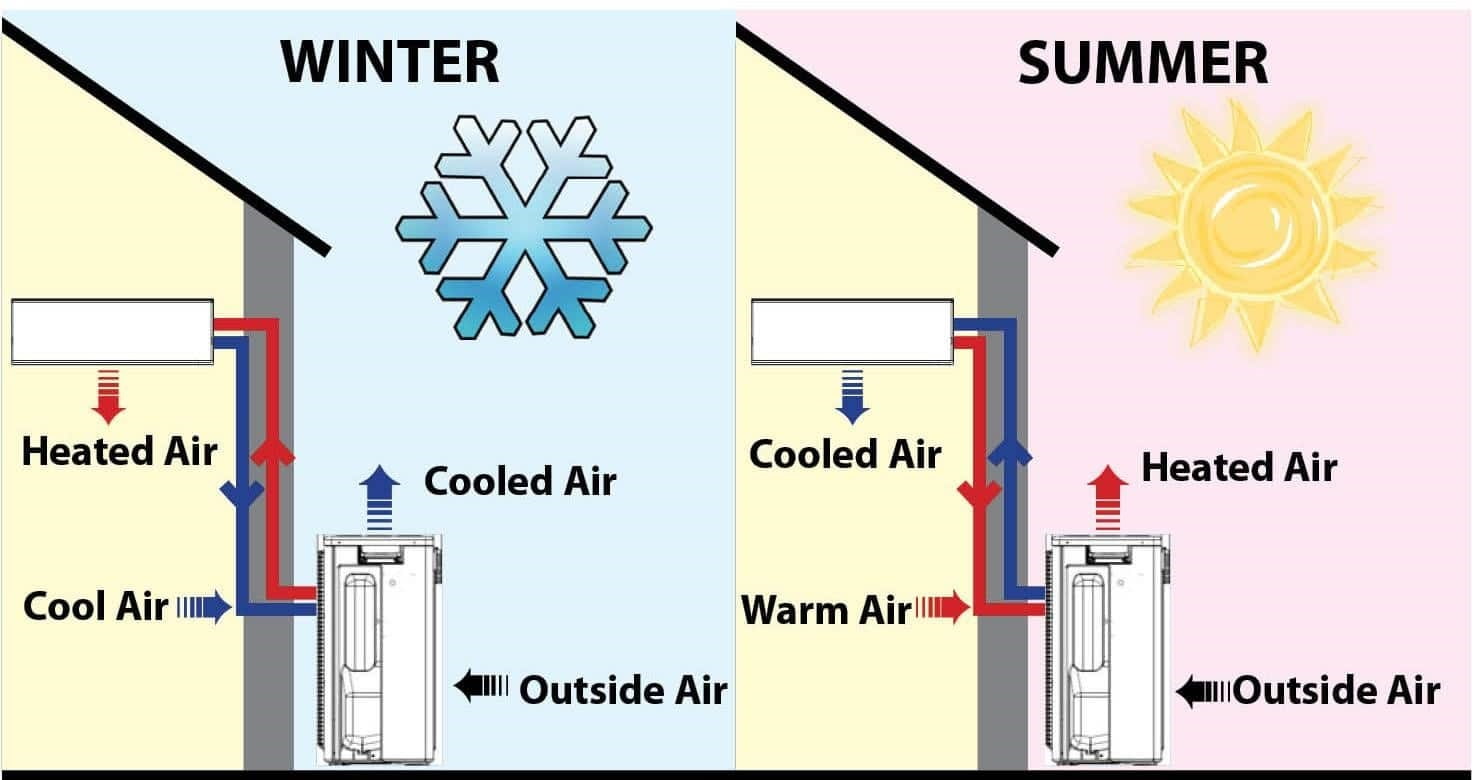
I imagine the buildings there just aren't built to support that heat plus the body height of hundreds or thousands of attendees?
reply