Is a point-to-point Internet just wishful thinking? If we all just get some good antennas [1], we could point our antennas at each other multiple times a day and exchange large quantities of data asynchronously (within a small geographic area). My old TV antenna used to rotate internally when you changed the channel to locate the signal, it's just servos spinning antennas. I think there's value in both network designs. Reading articles like these gives me a hunch that fiber will never be secure, ever again, so an Internet that doesn't run on fiber is one I look forward to.
A fiber is point-to-point unless there's an add/drop along the way. A submarine cable is point-to-point between say California and Japan or New York and Southampton.
That 5GHz radio has short reach and low capacity. It'd only make sense in certain situations. It would not be suitable for the gigantic capacity required by the Internet backbones.
For example, with the advent of coherent optical technology, you typical submarine cable is carrying 4000x the capacity of that radio (4Tb/s). Terrestrial long haul systems can be easily 8Tb/s.
To what purpose? As long as it is interest from a government/powerful institution to spy on something they will for sure develop a way to do so. Nothing is safe...
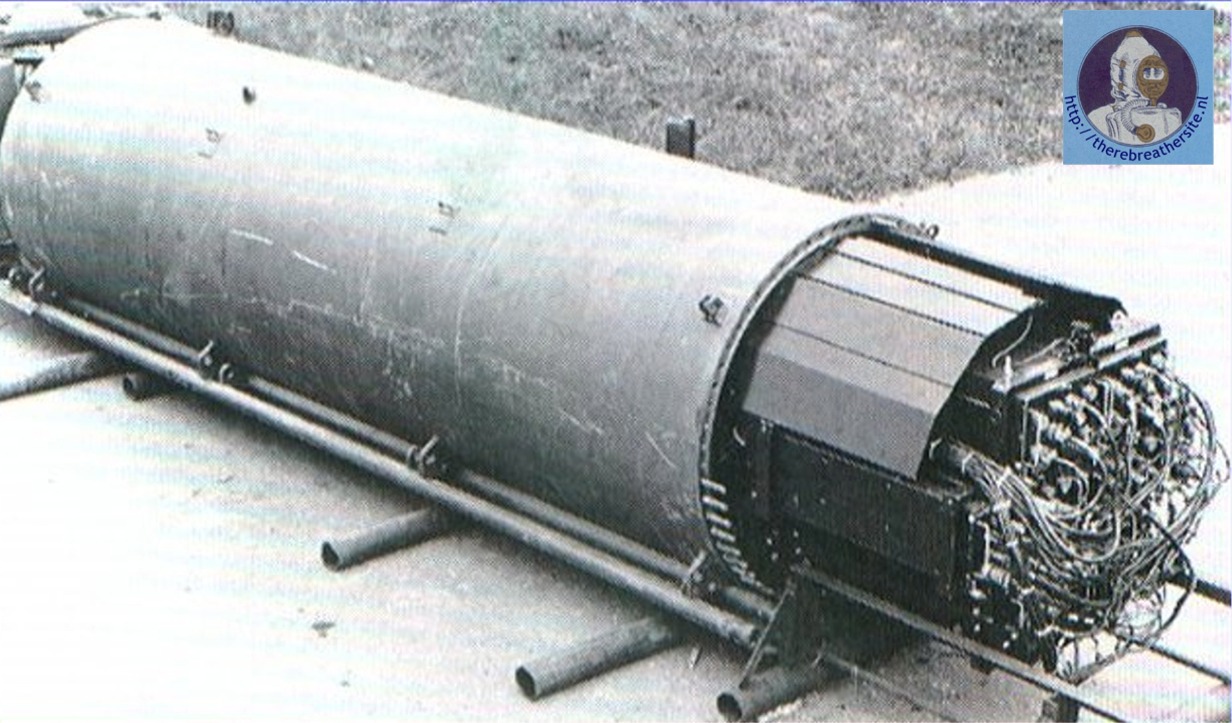
It might be interesting to readers some more information about these underwater taps. The devices are built to detach when the cable is raised to prevent detection.
How long they store data? This one was 1-2 weeks before it had to be collected via submarine and new drives put in or the drives wiped.
Later devices such as the nuclear powered ones developed by Bell Labs and buoy tethered devices.
Also, here is a great cable map that has been around a couple years, it shows who owns each cable. http://www.submarinecablemap.com/
I have a question. How do you connect two optical cables as opposed to copper wires? Can you melt the glass together or do you have to put a repeater inbetween? I have no clue how you can repair glass fibers.
You melt the glass in controlled manner and let it to fuse together. As far as the process goes it is mostly similar to how lab technicians in chemistry labs build custom glassware, but with much smaller dimensions and better control
In practical terms you use ridiculously expensive computer controlled portable machine that just does it without much of manual intervention. It is done by such automatic splicers almost since fiber optics are used for practical applications. There were manual (mostly mechanical) splicers that are not too hard to use (it certainly requires less skill than above mentioned laboratory glassware), but it's more economical to just automate the task.
The problem is that even almost perfect splice incurs significant additional signal loss, so for long cable runs you do want to do smallest number of splices (and connectors, which are orders of magnitude worse) as possible.
The whole mechanism tends to be mounted inside the case on some kind of damping, but I would assume that has more to do with overall ruggedness than with vibrations in operation (it's precision micro mechanics that are quite rigid, flexing of the fiber itself does not seem like much of an issue to me).
Ah, I see. Interesting. Thanks for the explanation! If a public tour is ever offered on such a repair ship, I'll check it out, it sounds like awesome technology.
While melting the glass is standard for permanent splices like those used in joining sections of fiber, it is not required for a tap. Fiber bending and evanescent coupling are two methods that do not modify the source fiber[1][2][3][4].
Across undersea long hauls, optical amplifiers exist (think repeaters, but without any introduction of delay). They get their energy from being pumped by a wavelength of light different from those used for data transmission[5].
Out of interest; Amongst the Snowden leaks, was there a map of the physical locations where the NSA and the 5-eyes have their tap points in relation to where these cables pop out of the water onto land?
Do Americans realize their country works like a criminal gang?There's an innocent man still in prison today for trying to help the victim (Russia) detect being illegally spied on by America. Why is he still in prison? He did the right thing by exposing the spying. Why aren't the sailors of the American submarine in prison for their crimes?
I think it's interesting that this seems to have been written and put together by a digital agency, not a journalism company or nonprofit. I wonder what benefits the agency gets, if any. Or maybe they just think underwater cabling is fascinating. (I agree!)
Some of the claims don't sound right. 99% of all international communications are carried on undersea cables? I imagine a lot more than 1% of international traffic is between countries in continental Europe, for a start.
Also undersea cables have substantial benefits for long distances: Less chance of getting cut; fewer border issues to deal with; easier to route around conflict zones; the water acts as a natural boundary against simple opportunistic theft or sabotage. So even places where there may be a shorter land route you'll often find undersea cables.
It's also been a changing target. "Size of the library of Congress" in 1996 is not what it was in 2012, for example - the comparison doesn't carry well over time.



[1] anything on the order of 1Gbps, 10-100km: http://www.ubnt.com/airfiber/airfiber5/